
Top 5 Traits of Great Inside Sales Professionals

March 15, 2023

The most successful inside sales professionals think and act differently than your average salesperson.


What sets them apart?


They have discovered the traits that guarantee selling success and work tirelessly to cultivate those traits in themselves.


In the course of working with Inside Sales Managers from top-performing companies, I have asked them what traits they believe make inside sales professionals great. Here is a compilation of their top responses:


1. They are fantastic conversationalists and storytellers.

Storytelling not only drives home the more entertaining, real-life examples that help prospects connect the dots on how a product or service could impact their own unique situation, but it also serves to build stronger connections. It helps get past the often transactional nature of a sales conversation.


2. They have excellent phone voices and vary their pace, tone and volume.

They take the time to rehearse and practice what they want to say and how they want to say it. They make their words sound more interesting by changing their tone and inflection. Using vocal highlights and inserting some purposeful pauses helps the speaker sound enthusiastic and confident while maintaining clarity in their voice and delivery.


3. They are entertaining to talk to. They make you smile and/or laugh in the first couple of minutes.

They know we buy from sales professionals we like. If they sounded like a robot or just pitched a mile a minute without building rapport, they would diminish their ability to succeed. Top inside salespeople tend to be upbeat and radiate a sense of humor, fun and general positivity. These qualities shine through when speaking with prospects and customers.


4. They are highly organized. They prepare to win by planning for purposeful calls.

Sales professionals who achieve the best numbers quarter after quarter all have one thing in common: focus. They understand what they need to do to be successful and set goals for themselves to achieve that success. They act with purpose in their day-to-day activities and apply laser focus to all aspects of their work.


5. They have no fear of the phone.

Many Sales Professionals today rely on email as their primary means of communication with prospective buyers. The best ones do not. They know the odds will not be in their favor if they default to email. That’s what average salespeople do. Great inside sales professionals pick up the phone first every time. Doing this not only demonstrates they are real people, instead of spam bots, but it dramatically increases their chances of a successful connection.


As you read this top five list, did any or all traits ring true for you? They may be ingrained in your DNA, or maybe a little extra training, stick-to-itiveness and creativity are required to truly become the best inside sales professional you can be. Assess what it is YOU do that makes you amazing in inside sales and hone your craft in areas you can improve.


Ultimately, the mission in any sales role is helping people do something differently, better and more efficiently while positioning yourself as an advisor to help your customers. Good selling out there!

August 12, 2026
AI has changed how sales professionals prepare. In minutes, industry specific AI tools can help you research a company, understand an industry, organize your thoughts, and generate questions for an upcoming meeting including targeted categories. That is a real advantage. But it can also create a dangerous feeling: I already know this customer. You read the website. You scan recent news. You review a few LinkedIn profiles. You uncover lease renewal or contract renewal dates. And then, AI gives you a polished summary of the company’s likely priorities and challenges. The problem? “Likely” can quickly start to feel like “true.” AI should prepare you for discovery. It should never do the discovering for you. Here are five ways to use AI without losing the curiosity that makes great selling work. 1. Use AI to Prepare AI is excellent at helping you get ready. Use it to research companies and industries, brainstorm questions, organize your thoughts, identify possible decision-makers, and spot blind spots. Used well, AI saves time and helps you enter the conversation more informed. Try this prompt: “I’m preparing for a first meeting with [company name]. Using publicly available information, give me a brief overview of the business, three possible priorities or challenges, and three thoughtful discovery questions.” But preparation is only the starting point. The goal is not to prove how much you know. It is to learn what you do not know.  2. Watch Where AI Can Fool You AI can make assumptions sound like facts. It can also be incomplete, outdated, or simply wrong. Even accurate information can lead to the wrong conclusion. A company may be expanding, but growth may not be the customer’s biggest concern. The real issue could be staffing, service, cost control, or the time lost managing too many vendors. The danger is not using AI. The danger is believing you have learned everything before meeting the customer. Preparation should increase your curiosity, not replace it. 3. Remember: Curiosity Cannot Be Automated AI can tell you what a company does, what happened recently, and what trends may affect its industry. Only a real conversation can uncover why the customer is considering a change now, what is frustrating them, what success looks like, and what they are worried could go wrong. Use your research to open the conversation, not control it. 4. Ask the Questions AI Cannot Answer AI can suggest questions. The art of selling is knowing what to ask next. Try: “How did you decide on ….?” “Had we not called, what were you already planning to do about ______?” “What have you already tried?” “If you were sitting in a review six months from now, having personally made a significant impact on the business, what would success look like for you?” “What happens if nothing changes?” These questions move the conversation beyond surface-level pain. They also help you avoid pouncing too quickly. Whether the customer mentions delivery, cost, service, or vendor consolidation, slow down. The first answer is rarely the full answer. Ask one more question before offering one more solution. 5. Do Not Outsource Your Curiosity Everyone has access to similar AI tools. Not everyone listens well. Not everyone notices hesitation, follows an unexpected comment, or stays with an issue long enough to uncover what really matters. That is still your competitive advantage. Use AI to prepare, broaden your thinking, and identify what you may be missing. Then put it away and be fully present. Before your next customer conversation, challenge yourself to do three things: Prepare with AI. Verify with the customer. Ask one more question before offering a solution. Do not simply work through a list of AI-generated questions. Listen to the answer and follow where it leads. The question you did not plan to ask may be the one that uncovers the real opportunity. The more powerful AI becomes, the more valuable human curiosity becomes. AI can help you enter the conversation more informed. Your next move is to stay curious long enough to leave the conversation with a better understanding.
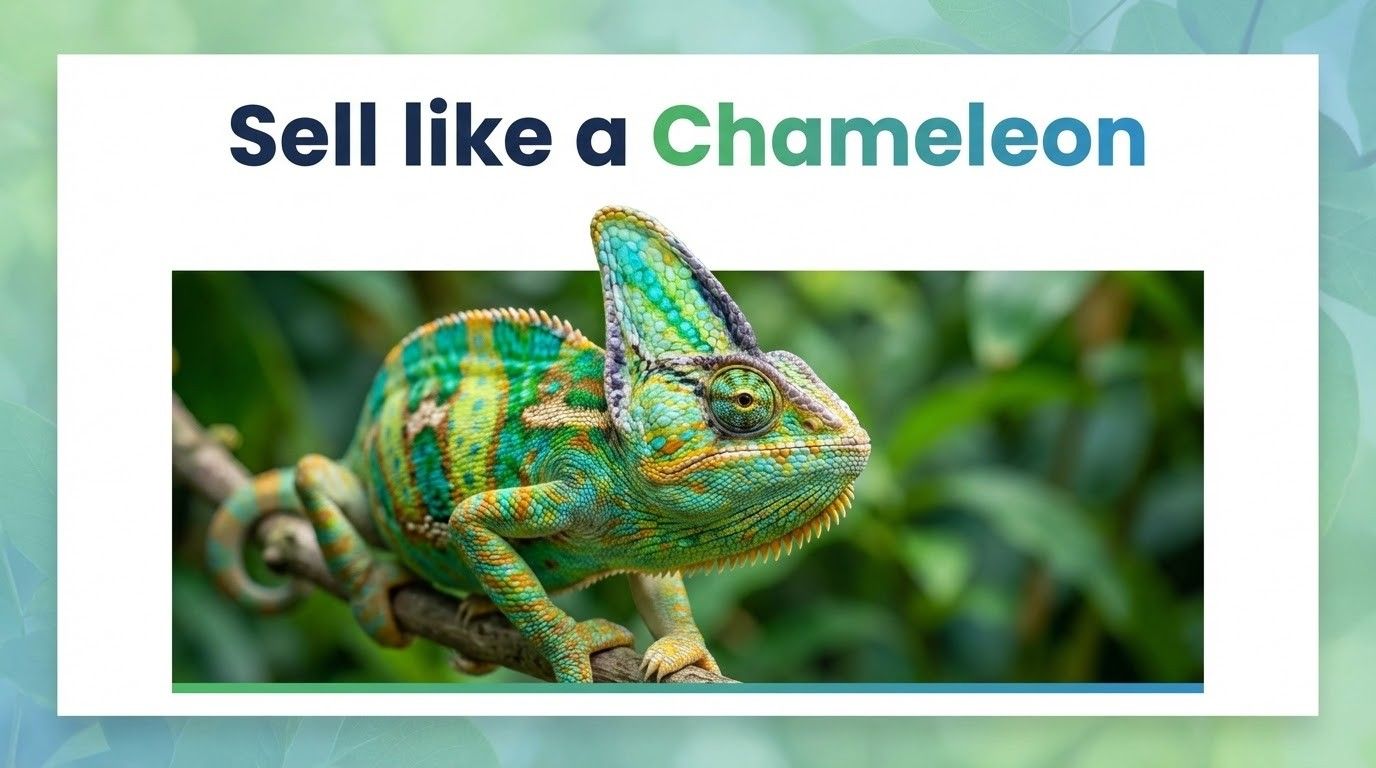
Sell like a Chameleon
May 24, 2026
Here’s a simple guide to recognizing four common customer speeds and how to adjust your approach.