Onboarding Excellence: Strategies for Seamlessly Integrating New Sales Reps
Onboarding is not just a checkbox activity.
A well-structured onboarding program does more than welcome new sales representatives; it equips them with the skills, knowledge, and confidence to excel from day one.
Here are some essential strategies to empower your sales reps and drive your business forward.
1. Set the Tone with Culture and Attitude
Start the onboarding process with a clear emphasis on your dealership’s culture and attitude. Whether you're a small dealership or business where the owner and sales manager are the same person, or a larger one requiring more deliberate interaction with top leadership, setting expectations early is key.
Make sure the new hire feels known, not just another number.
**Consider building in your first-week curriculum a session on goal setting.**
Whether your hire is early in their career or seasoned, personal and professional goals matter. Here’s how you can foster this culture:
- The owner or manager shares their own goals.
- New hires hear from their peers about their goals.
- New hires share their personal goals so the team can get a sense of what drives them outside of work, helping everyone understand the personal motivations behind their proactive efforts.
I've personally witnessed how sharing goals can lead to everything from the creation of a charitable non-profit to achieving a “Bucket List” item like riding a Harley on that salesperson’s lunch break.
Sharing goals is like magic and fuels motivation for sales activities when people are clear about what they want.
2. Capture Best Practices from Your Elite Salespeople and Specialists
Capture the best practices of your top salespeople and specialists through video clips.
Consistency is key, and short, 2-3 minute video clips can ensure new hires receive the same high-value tips and insights from your best performers, without needing to coordinate busy schedules. These peer-to-peer videos can help new hires grasp what works from those already succeeding, saving time and adding long-term value to your onboarding process.
A small investment in merging the clips with music or visual polish is minimal compared to the logistics of gathering everyone in a room at the same time. This approach ensures a consistent, professional onboarding experience.
3. Capture Client Success Stories
Help new hires learn at least five key client success stories. Stories provide credibility, demonstrate value, and build trust with customers. A new rep won't have their own stories yet, but they can learn others'. Capture impactful stories from other reps, using a simple format:
- What was the client’s problem before?
- Why did they change to your dealership?
- What impact did your dealership have?
These stories can be shared through team meetings or video clips, giving new hires valuable tools to gain confidence early. When I started my business 20 years ago, I didn’t have my own stories either. I had to learn from others, study their wins, and share those stories until I had my own. Teach your team to do the same.
4. Introduce Technology Early and Often
From learning your CRM and ERP solutions to incorporating tools like ChatGPT, AI platforms, and virtual meeting recording software, guiding new salespeople to learn these tools early will fuel your onboarding process and enhance productivity.
Technology is no longer optional for sales teams—according to Salesforce, 79% of salespeople say their role depends on tech tools.
Assess tech aptitude early in onboarding by:
- Observing how quickly new hires engage with digital tools and systems.
- Asking them to build email templates or proposals directly in the CRM.
- Guide prospecting efforts, follow-up tasks, and pipeline updates in the CRM. If this isn't happening, is the issue a lack of discipline or know-how?
- Is your new salesperson taking notes and do they have screenshots to guide them vs. relying on memory alone?
Encourage hands-on learning from day one to ensure they become proficient with the essential tools that will drive productivity.
5. Foster a Culture of Coaching and Development
Creating a culture of coaching and development is critical for long-term success. Set expectations for regular interaction between managers and reps, focusing on the following:
- Consistent 1-on-1s with managers to review progress and challenges.
- Pipeline reviews to assess prospecting efforts and sales activities.
- Review of recorded virtual meetings (e.g., Zoom or Teams) on a weekly basis.
Fostering career development and continuous coaching positions managers as catalysts for helping their teams grow. Regular coaching also ensures that managers refer back to the goals set on Day 1, keeping reps aligned with both personal and professional growth.
As Gary Hoover wisely stated, “Nothing is a more powerful agent for attracting and keeping talented people than a clear vision, especially if the organization is living that vision and achieving its goals."
It's important to tie your onboarding program back to those personal goals. Revisiting goals reminds your new hires of their purpose, what drives them, and how the dealership can help them achieve those aspirations. From the start, your reps will feel connected and motivated to push forward, knowing their growth matters to the dealership.
Set Reps Up for Long-Term Success
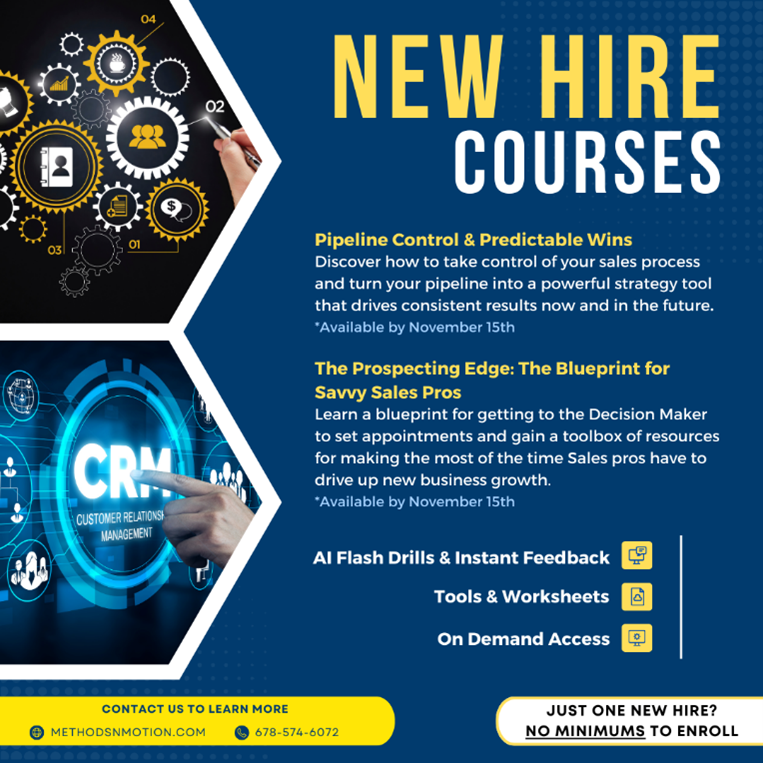
Are you looking for a program to help onboard your new hires? We can help! Check out our two new courses that are coming soon!
With a structured roadmap unique to the supply industry, engaging role-play exercises, AI powered flash drills for memory testing, and continuous coaching, your new sales reps will feel empowered to hit the ground running.